"We talked and planned for days and finally agreed that in our first presentation nothing should be done to take the spotlight away from Cinerama. If, to take an extreme example, in our first picture we had some tremendous attraction, lets say Charlie Chaplin doing Hamlet, the focus of attention would be either on the great clown or on the new approach to Shakespeare. If we had concentrated solely on Aida, and all of Aida, our work would have been closely associated with what people thought of our Aida.
"We didn't want to be judged on subject matter. This advent of something as new and important as Cinerama was in itself a major event in the history of entertainment. The logical thing to do was to make Cinerama the hero. And that is what we have tried to do. This, our first, is a demonstration. A portion of our show takes place inside Milan's La Scala and our cast here includes more than 600 players. A portion of it takes place in the famous Cypress Gardens of Florida where boats and water skis defy the laws of gravity. Cinerama's stereophonic sound is demonstrated with a thousand Scotch bagpipes and, in another portion of the show, with one of the finest symphony orchestras ever brought together. In introducing our new kind of hero, the Cinerama camera, we have brought to the theater a new kind of emotional experience."
Lowell Thomas - 1952
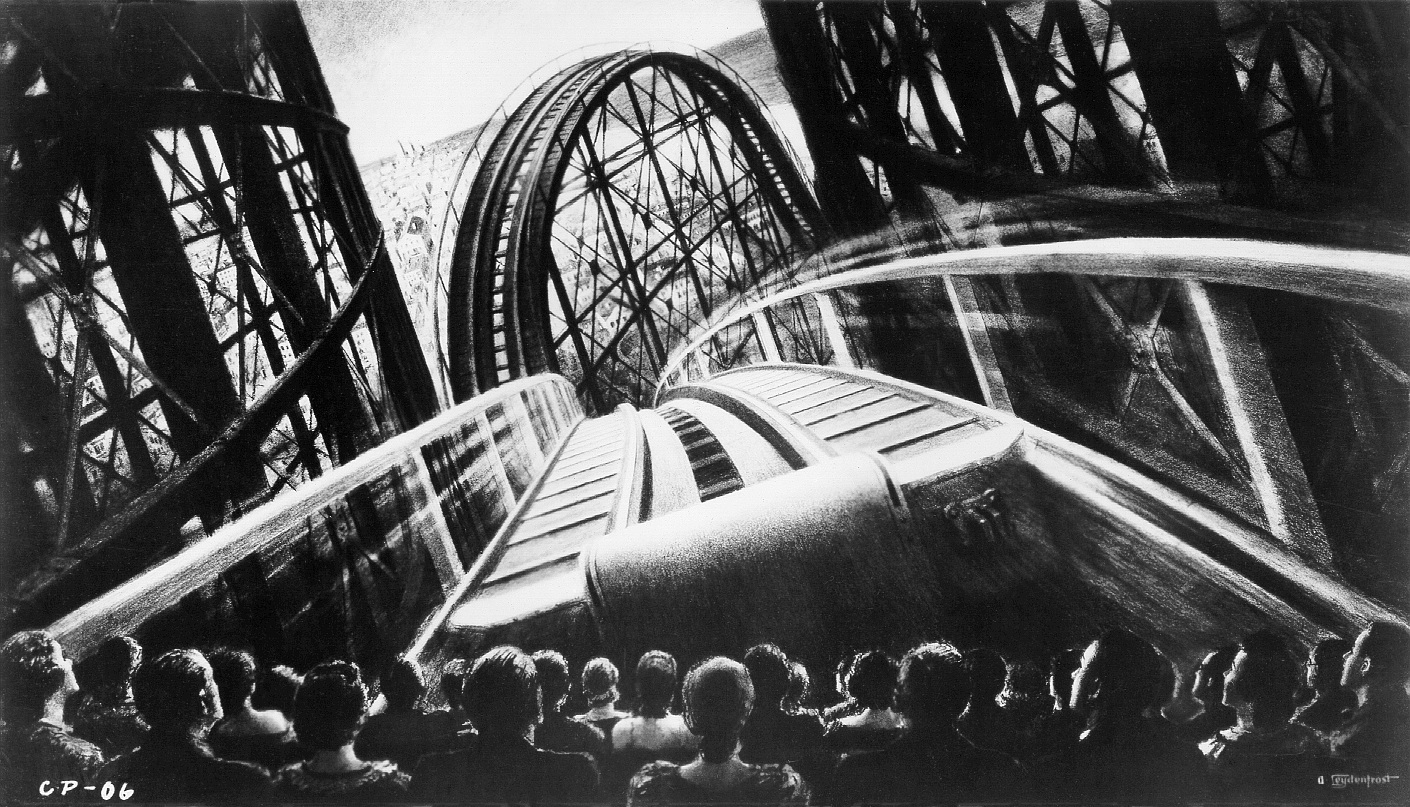 |
Artist Karl Leydenfrost depicts the breathtaking roller coaster scene
which engulfs the audience in "This Is Cinerama," first production in the new multi-dimensional motion picture
medium. |
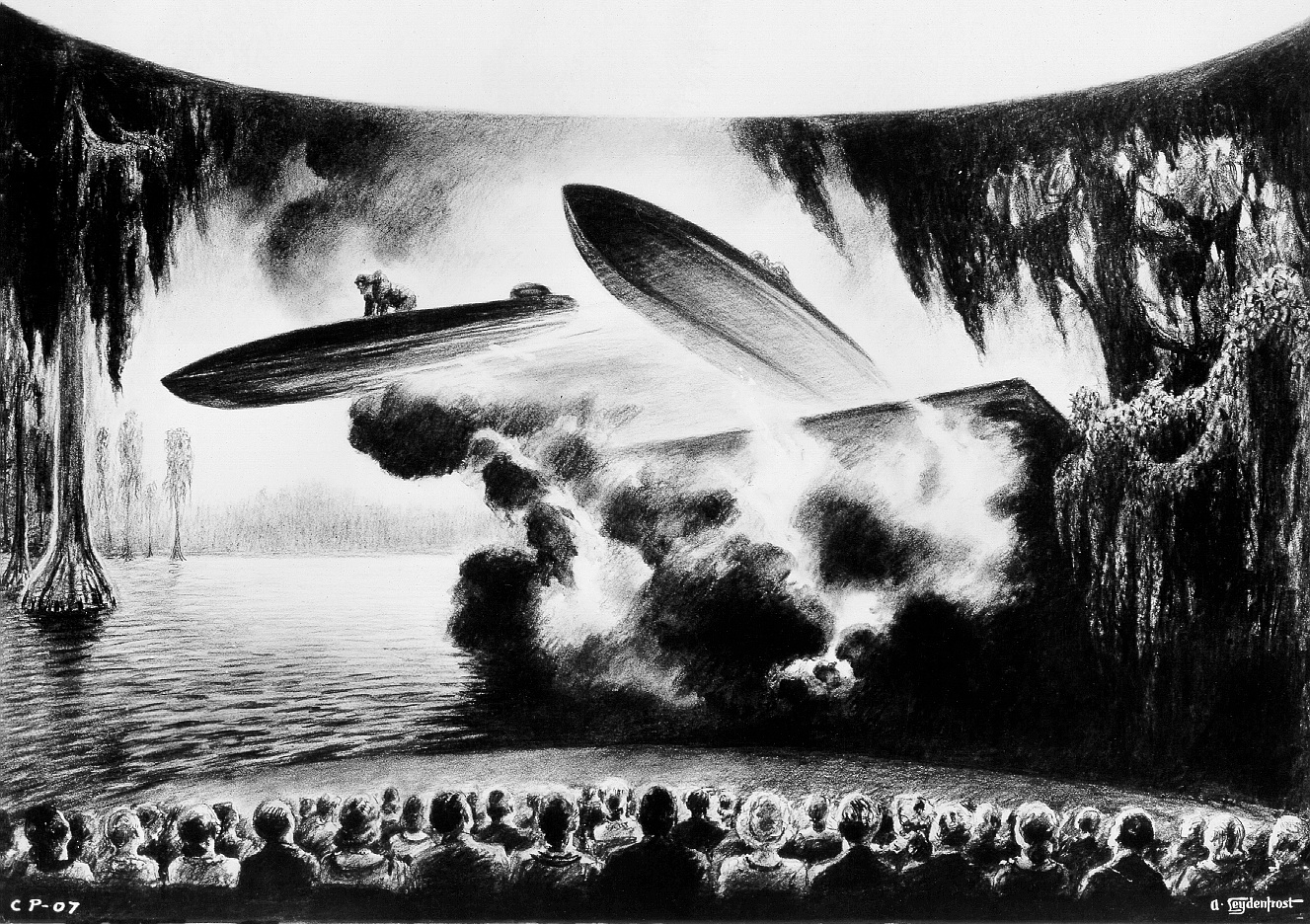 |
Outboard motor boats that sail through the air with the greatest of ease provide one of the many thrills in "This Is Cinerama," first production in the unique multi-dimensional medium that "puts you in the picture." (Drawing by Leydenfrost) |
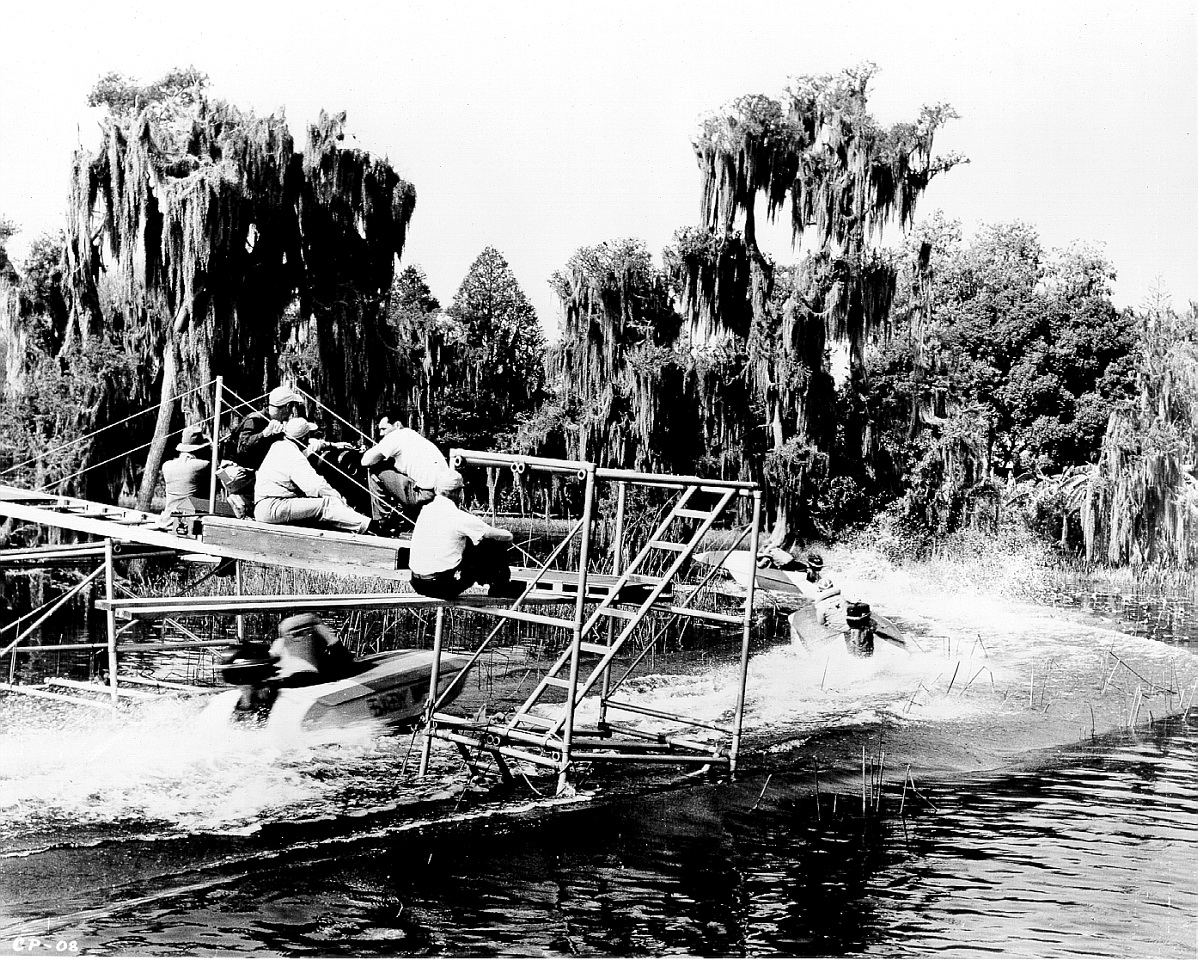 |
Balanced perilously on a scaffold above one of the picturesque waterways of Florida's Cypress Gardens, the Cinerama camera records a thrilling motor boat race in which the flying speedboats seem to burst from beneath your feet. This is one of the scenes from "This Is Cinerama," first presentation of the new medium which brings you "into the picture". |
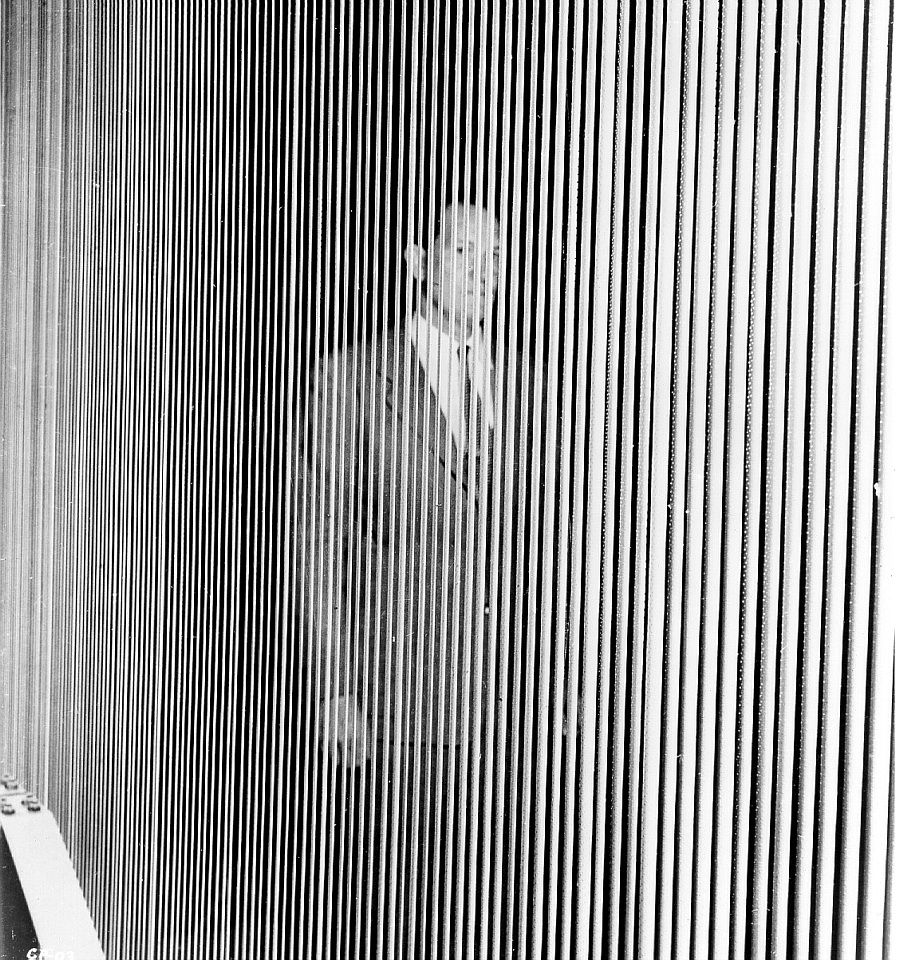 |
Although presenting a solid front to the audience, the unique Cinerama screen actually consists of more than a thousand strips of perforated plastic tape arranged like the louvres of a gigantic Venetian blind. The screen makes its theatre debut in "This Is Cinerama," first production in the new multi-dimensional motion picture medium. (Popular Mechanics Photo) |
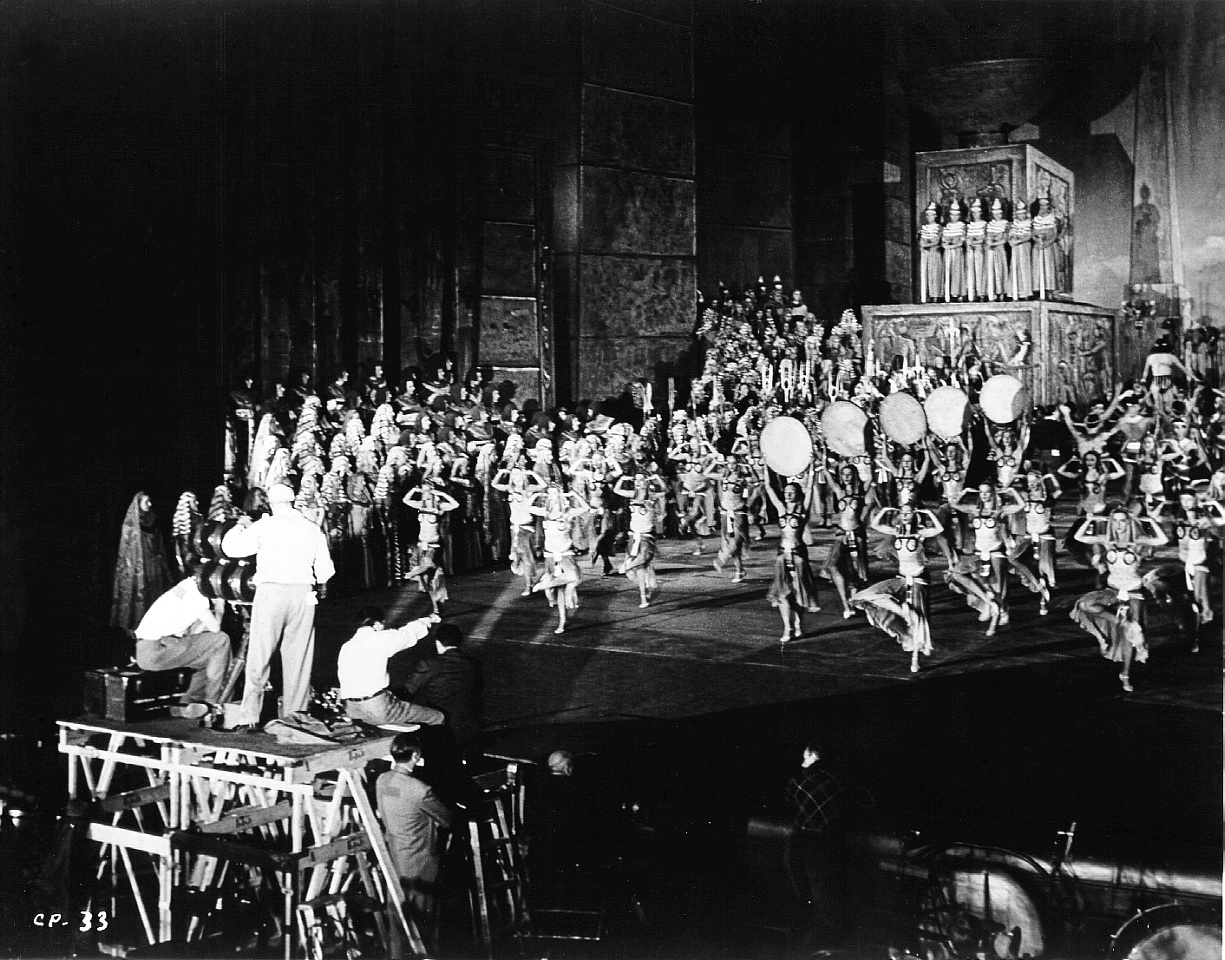 |
The spectacular Triumphal March from "Aida," as performed at Milan's historic La Scala Opera House, is one of the features of "This Is Cinerama," first production in the revolutionary new "you-are-there" motion picture medium. La Scala put nearly one thousand people on the stage for this scene, and the Cinerama camera had space left over for scenery. Special permission was granted for this filming by the Opera House's directors, with the stipulation that they must approve the results as up to La Scala's high standards. The approval was given enthusiastically. |
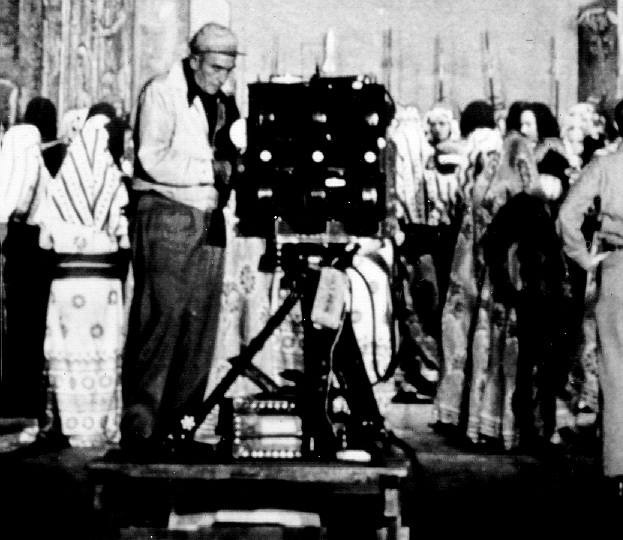 |
Detail from another publicity still made at La Scala during the production of the Aida sequence. |
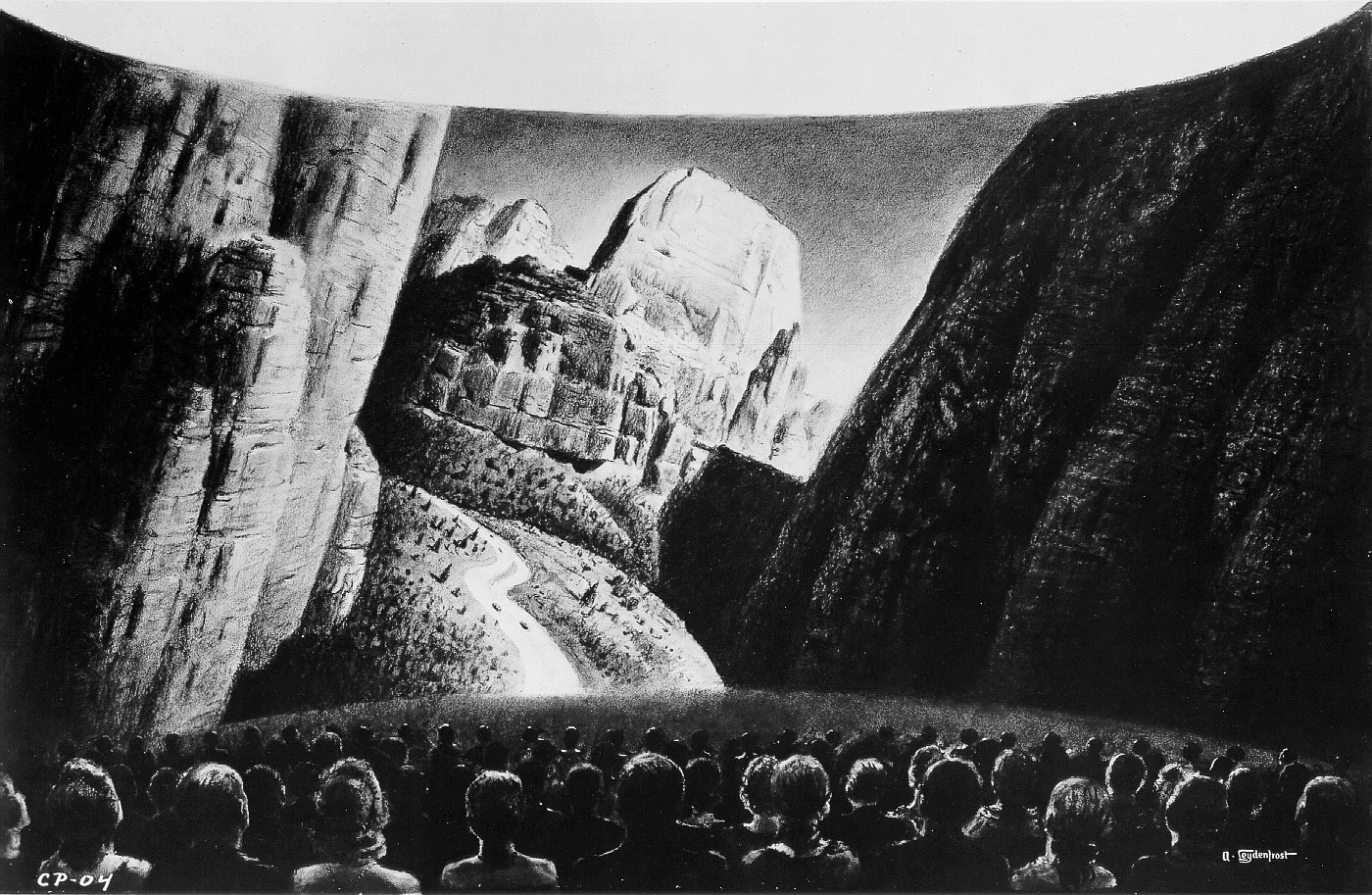 |
One of the dramatic highlights of "This Is Cinerama" is
an aerial sequence in which the audience is taken for a breathless ride
through the canyons of' Zion National Park in Utah. This is artist Karl
Leydenfrost's impression of the scene. | 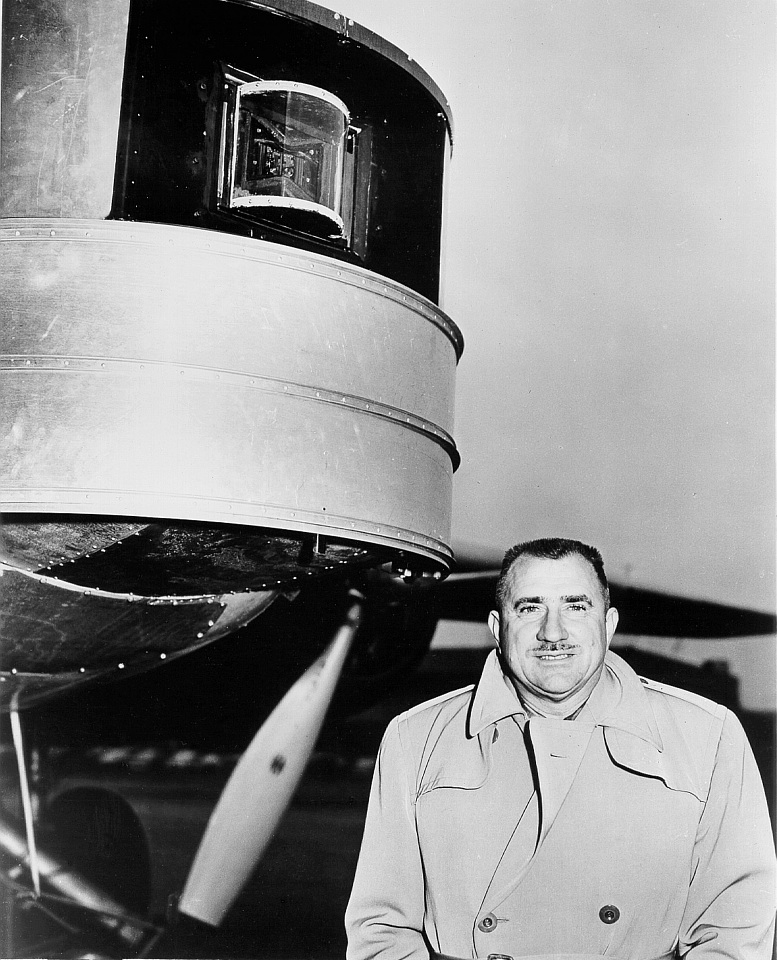 |
Stunt pilot Paul Mantz guides his converted B-25 through rugged Zion Canyon in the "America, the Beautiful" climax to "This Is Cinerama," the Lowell Thomas-Merian C. Cooper presentation. |
 |
Detail from the above photo showing the triple-eyed Cinerama camera nose mounted in Mantz' B-25, The Smasher. |
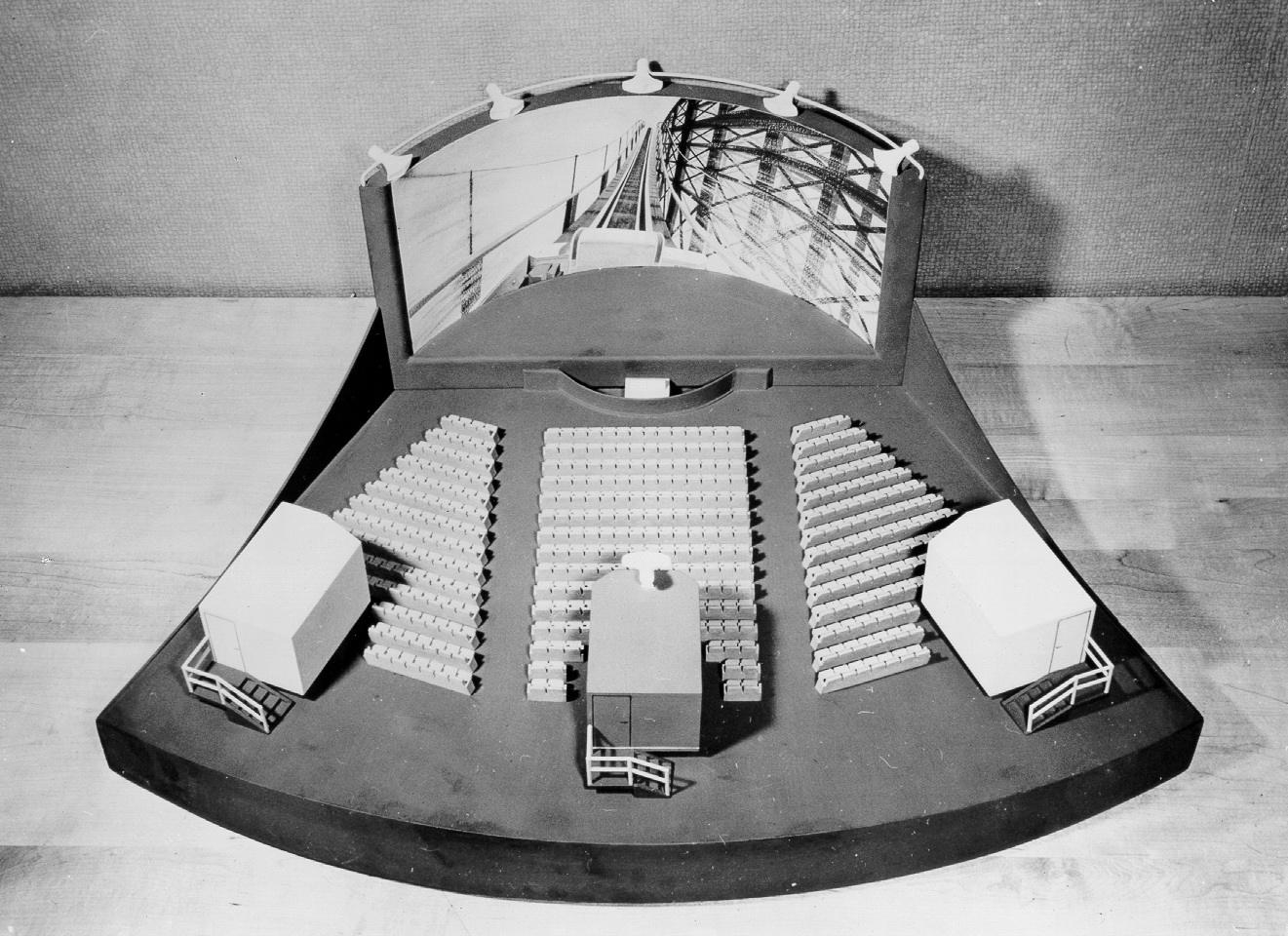 |
Demo model of Cinerama installation. Note the "booth" for the Cinerama theatre engineer located at the front of the stage area. This model was the basis of many publicity drawings. |